
Choosing a senior living community is rarely just about care services and cost. However, the size and setting of a community shapes daily life just as much. How residents spend their time, how staff get to know them, and how quickly care adapts as needs change. One question comes up again and again for families exploring assisted living in Spring Hill, FL: is a small residential assisted living facility (ALF) or a larger senior living community the better fit? Subjectively, both are valid paths; the difference is in the experience they offer, not which one is objectively “better.” This guide breaks down staffing, caregiver relationships, environment, cost, daily routine, and memory care support side by side, so you can weigh the trade-offs against your loved one’s personality and needs rather than guessing.
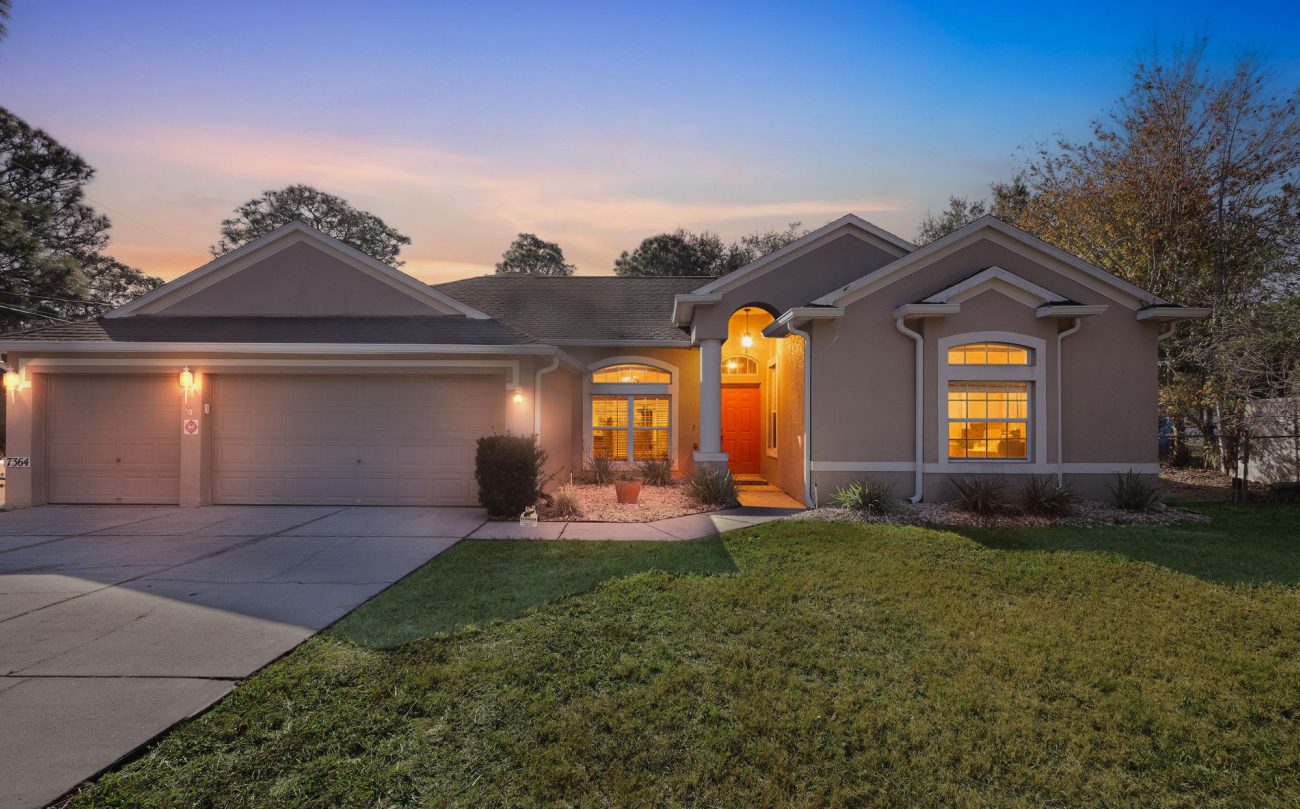
What Is a Small Residential Assisted Living Facility?
A residential ALF operates out of a home-like setting and serves a limited number of residents, often a handful rather than dozens. According to the Florida Agency for Health Care Administration (AHCA), the state’s assisted living facilities range from these small residential homes up to large communities with dozens of apartments, giving families a genuine spectrum to choose from rather than a one-size model.
Specifically, in a residential setting, care tends to center on:
- Personal care and hygiene
- Medication management
- Mobility support
- Meal preparation
- Housekeeping and laundry
- Wellness monitoring
- Social engagement
Ultimately, the appeal of small residential assisted living for most families is straightforward: a smaller number of residents means caregivers actually know each person, not just their chart.
What Is a Large Senior Living Community?
Large communities operate on a different scale entirely, often housing dozens to hundreds of residents, sometimes across multiple levels of care on one campus, including assisted living, independent living, memory care, and skilled nursing under one roof.
Physically, these tend to resemble apartment-style complexes: shared dining halls, activity centers, fitness facilities, and a full calendar of scheduled programming. For example, seniors who want variety, people-watching, and a packed social calendar, that scale is a genuine draw rather than a drawback.
Seven Ways the Two Models Actually Differ
1. Personalized Care
In a smaller setting, caregivers work with fewer residents and tend to develop a real understanding of each person’s routines, preferences, and personality not just their medical needs. The National Institute on Aging has noted that consistent caregiver relationships and personalized support are linked to better emotional well-being in older adults. As a result, that familiarity also means care plans can shift quickly as needs change. In larger communities, professional systems and procedures are just as rigorous, but with more residents per caregiver, day-to-day interactions can feel more procedural by comparison.
2. Staff-to-Resident Relationships
Smaller homes mean residents see the same faces daily, which tends to build trust faster. Meanwhile, larger communities employ a wider bench; nurses, activity coordinators, caregivers across multiple shifts which supports more extensive services, but residents interact with a broader rotating cast rather than a consistent few.
3. Social Environment
Similarly, residential ALFs foster a close, family-style atmosphere: shared meals, a smaller social circle, more one-on-one time. Larger communities lean into scale activity calendars, clubs, entertainment, fitness classes, organized outings. However, neither is universally better; it depends on whether your loved one recharges in a quiet, familiar circle or thrives on variety and new faces.
4. Environment and Atmosphere
Notably, the National Center for Assisted Living points to independence, engagement, and resident choice as key drivers of quality of life and each model delivers that differently. Accordingly, residential homes read as warm and domestic, often easing the emotional transition out of a family home. In contrast, large communities read as resort-style campuses; landscaped grounds, multiple dining venues, more square footage to explore.
5. Flexibility and Individual Attention
Smaller caregiver-to-resident ratios naturally allow more day-to-day flexibility; a favorite meal, an adjusted schedule, a preferred routine. Larger communities generally run on more structured, standardized schedules simply because of the population size, even while still working to accommodate individual needs.
6. Memory Care Support
Importantly, the Alzheimer’s Association notes that millions of Americans live with Alzheimer’s, making memory care planning a real consideration for many families regardless of setting size. In fact, structured routines and familiar surroundings can meaningfully reduce anxiety for residents with cognitive decline. Consequently, smaller residential settings offer that calm, low-stimulation familiarity by default. On the other hand, larger communities often build dedicated memory care neighborhoods with specialized staff training and enhanced security; a different but equally valid approach, particularly for more advanced cognitive needs.
7. Family Involvement
Likewise, direct, uncomplicated communication is one of the most consistently cited advantages of smaller communities. There are fewer layers between a family and the people actually providing care. That said, larger communities support family involvement too, just often coordinated through more departments and points of contact.
Small Residential Assisted Living vs. Large ALF: Side-by-Side
To that end, here’s how the two models compare directly:
| Feature | Safe Harbor Amóre (Residential) | Large Assisted Living Facilities |
|---|---|---|
| Care Approach | Personalized to each resident’s routines and preferences | More standardized to serve a larger population |
| Caregiver Relationships | Consistent caregivers, strong familiarity | Multiple caregivers across shifts and departments |
| Individual Attention | High — smaller resident population | Divided across more residents |
| Family Communication | Direct, frequent | Often routed through multiple departments |
| Environment | Warm, quiet, home-like | Campus-style, more activity and movement |
| Flexibility | High — routines adapt easily | More structured and procedural |
| Social Experience | Close-knit, familiar circle | Larger social circle, broader activity calendar |
| Memory Care | Familiar surroundings, consistent routine | Dedicated memory neighborhoods, larger-scale programming |
| Transition From Home | Generally smoother | May take longer to adjust to |
| Overall Focus | Relationships and personalized comfort | Amenities and breadth of services |
Which Fits Your Family?
Truth is, there’s no universal right answer. The honest framing is trade-offs, not a hierarchy. Overall, a residential setting tends to suit seniors who value close relationships, quiet surroundings, and a genuinely home-like pace. A larger community tends to suit seniors who want an active social calendar, a wider range of amenities, and more built-in variety day to day.
Therefore, the most reliable way to know which fits is to actually walk both settings; watch how staff interact with residents in the moment, not just what’s on a brochure.
Why Families Choose Small Residential Assisted Living
A growing number of families in Spring Hill are choosing small residential assisted living specifically because they combine licensed, professional care with the pace and warmth of an actual home, not an institution scaled down. With that in mind, for a deeper dive, look at what’s driving that shift locally, see Why Families in Hernando County Are Choosing Residential ALFs Over Large Communities.
Small Residential Assisted Living at Safe Harbor Amóre
Safe Harbor Amóre is built around the residential model described above: personalized care plans, medication management, home-style meals, wellness monitoring, memory care support, and caregivers who are present around the clock; not rotating through in shifts large enough to lose track of who’s who. In other words, the right choice depends on your loved one’s specific needs and social preferences, not on which model is “bigger” or “better” in the abstract.
Frequently Asked Questions
What is small residential assisted living?
A smaller senior care home often housing a limited number of residents that provides personal care and daily support in a home-like setting rather than an institutional one.
Are small residential assisted living less expensive than large communities?
Not necessarily. Pricing depends more on services and level of care than on community size; some residential ALFs are comparable to larger communities, others more affordable.
Do small residential assisted living facilities provide medical care?
They provide personal care and wellness support, not hospital-level or skilled nursing care. For advanced medical needs, a skilled nursing facility is the appropriate setting.
Is small residential assisted living better for a resident with dementia?
It depends on the stage and needs. Some residents do better with the low-stimulation familiarity of a small home; others benefit more from a dedicated, structured memory care program with specialized staff which tends to be more common in larger communities.
Can family members visit regularly?
Yes, in both settings, regular visitation and family involvement are standard practice.
Do smaller communities offer activities?
Yes — typically more tailored to individual interests, given the smaller group size, rather than large-scale programmed events.
How do I figure out which is right for my parent?
Tour both. Bring your loved one if possible, and watch how they respond to the pace and scale of each; that reaction often tells you more than any comparison chart.
What should I actually look for on a tour?
Caregiver-resident interactions in real time, cleanliness, how engaged residents seem, visible safety measures, and how staff communicate with you and with residents.
The Bottom Line
Ultimately, size isn’t really the deciding factor, fit is. For instance, some families find that peace of mind lives in a quiet, familiar home with consistent faces. By comparison, others find it in a larger community’s breadth of amenities and activity. The only way to know which describes your family is to see both in person, ask direct questions, and pay attention to how your loved one actually responds to each space. Schedule a private tour of Safe Harbor Amóre to see the residential model firsthand.