
When families begin researching senior care, they often picture large, hotel-style buildings with long hallways and dozens of residents. But that’s not the only model available. For many families, it isn’t the best one. Residential assisted living offers a smaller, more intimate alternative: a home-like setting where residents get personalized attention instead of getting lost in a big institution.
For families across Spring Hill and Hernando County, choosing between a large community and a smaller residential setting can shape a loved one’s daily experience in a big way. This guide explains what this type of care actually looks like, why smaller communities tend to produce better outcomes, and how to know if it’s the right fit for your family.
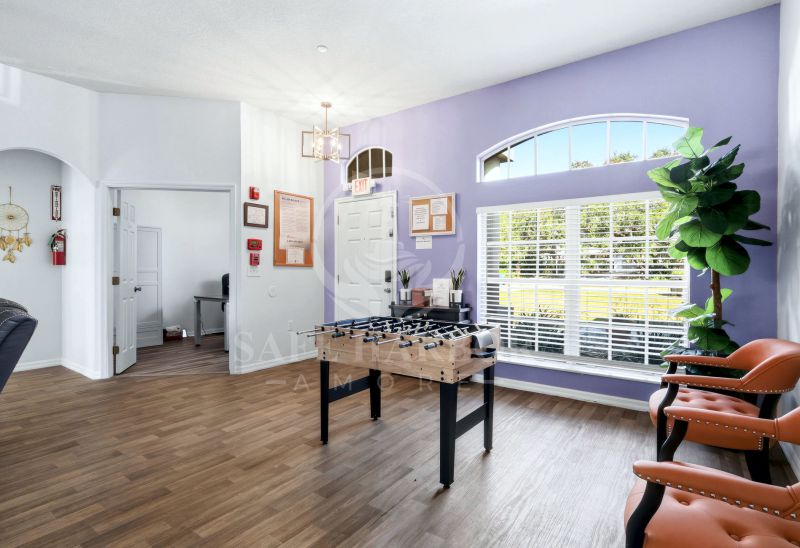
What Is Residential Assisted Living?
Residential assisted living refers to smaller communities that serve a limited number of residents rather than dozens or hundreds. These are often converted homes or purpose-built residences. A typical home in this model houses somewhere between six and twenty residents. Staff know each person by name, routine, and preference.
Because the setting is smaller, this approach naturally lends itself to a more personal, family-style style of care. Residents feel like individuals rather than one of many names on a chart.
Residential Assisted Living vs. Large Institutional Communities
The differences between residential assisted living and larger communities go beyond just size. Consider the following comparison:
| Feature | Residential Assisted Living | Large Institutional Community |
| Resident count | Typically 6–20 residents | Often 50–150+ residents |
| Staff familiarity | Staff know each resident personally | Staff-to-resident ratio often lower per shift |
| Environment | Home-like, residential setting | Hotel-style or clinical layout |
| Daily routine | Flexible, individualized | Often standardized schedules |
| Noise and stimulation | Quieter, calmer atmosphere | Can be busier and more overstimulating |
Families who prioritize personal attention and a calm environment often find that a smaller setting better matches what they’re looking for than a larger, more institutional community.
Why Smaller Residential Assisted Living Often Means Better Care
In a smaller home, caregivers typically manage a lower resident load per shift. That allows more time for one-on-one interaction, careful observation, and quicker response to changing needs. Staff spend more consistent time with the same small group of residents. As a result, they often notice subtle changes faster — a shift in appetite, mood, or mobility that might be easy to miss in a larger setting with higher turnover between shifts.
Many families across Spring Hill and Hernando County are choosing smaller assisted living facilities (ALF) for another reason: these communities tend to build more consistent staffing relationships. Residents interact with familiar faces day after day rather than a rotating cast of caregivers. That familiarity tends to build trust more quickly, which matters enormously for older adults adjusting to a new stage of life.
The Research Behind Small-Home Senior Care Models
The benefits of smaller, home-like senior care aren’t just anecdotal. The Green House Project, a nationally recognized small-home care model founded by geriatrician Dr. Bill Thomas, has been studied extensively since the early 2000s. A longitudinal study in the Journal of the American Geriatrics Society found that residents in small-house models reported meaningfully better quality of life than residents in traditional, larger nursing home settings, with care quality that matched or exceeded comparison sites.
That research focused on the small-house nursing home model specifically. But the underlying principle applies broadly: smaller scale and more consistent staffing improve resident wellbeing across senior care generally.
Reduced Isolation, Stronger Relationships
Social connection plays a bigger role in senior health than many families realize. According to The Cardiology Advisor, loneliness and social isolation among older adults are linked to higher risks of heart disease, depression, and cognitive decline, and isolated seniors are more likely to be hospitalized or admitted to a nursing home.
In a smaller setting, meaningful relationships tend to form more naturally. With fewer residents overall, shared meals, activities, and common spaces become genuine opportunities for connection rather than crowded, impersonal gatherings. Many residents form close friendships with both fellow residents and caregivers; something that can be harder to achieve in a larger, more anonymous environment.
A Familiar, Home-Like Daily Rhythm
One of the most noticeable differences shows up the moment you walk through the door. Rather than long corridors and a nursing-station layout, residents typically encounter a living room, a kitchen with the smell of a home-cooked meal, and shared spaces that resemble an actual house rather than a facility.
This rhythm matters, especially for residents who feel anxious or overwhelmed by large, unfamiliar environments. A quieter, more residential pace can reduce agitation, ease transitions, and help new residents settle in more comfortably during the early weeks after a move.
Personalized Care Plans in a Residential Assisted Living Setting
Because these communities serve fewer residents, caregivers can tailor care plans more precisely to each individual’s preferences, habits, and needs. Residents in a smaller setting often have more flexibility around wake times, meals, and activities, rather than fitting into a standardized daily schedule.
This individualized approach also extends to family communication. With fewer residents to manage, caregivers in this setting are often more available to answer questions, provide updates, and involve families directly in care decisions.
Is Residential Assisted Living Right for Your Loved One?
Residential assisted living tends to be a strong fit for seniors who:
- Feel overwhelmed or anxious in large, busy environments
- Benefit from consistent caregiver relationships
- Value a quiet, home-like atmosphere over an activity-packed campus
- Need more individualized attention due to memory-related or physical care needs
- Prefer smaller social settings over large group gatherings
That said, every family’s situation is different. If your loved one is highly social and enjoys a wide variety of amenities and organized events, a larger community with more extensive programming might be worth considering too. If memory-related needs are part of the picture, our guide on What to Expect from a Memory Care Facility can help clarify what additional structure might be needed.
Questions to Ask When Touring a Residential Assisted Living Home
When visiting a residential assisted living community, ask:
- How many residents currently live here, and what is the staff-to-resident ratio?
- How long have staff members typically worked here?
- How do you personalize daily routines for each resident?
- What does a typical day look like, from morning to evening?
- How does the team communicate with families about changes in care?
- What happens if my loved one’s needs increase over time?
Why Spring Hill Families Are Choosing Smaller Communities
Across Spring Hill and Hernando County, more families are gravitating toward smaller, residential-style assisted living rather than large regional communities. Part of this reflects the character of the area itself: a quieter, close-knit region where home-like settings simply feel like a more natural fit.
Choosing a smaller, local home also makes it easier for adult children to stay closely involved, visit often, and build real relationships with the caregiving team.
At Safe Harbor Amoré, we designed our residential assisted living home intentionally around this philosophy: a small, family-style setting where residents are known and cared for as individuals.
Frequently Asked Questions
What is the difference between residential assisted living and a traditional assisted living facility?
Residential assisted living typically refers to smaller communities, often in converted homes or purpose-built residences, serving a limited number of residents. Traditional or institutional assisted living communities are usually larger, serving dozens or even hundreds of residents across a larger campus.
Is smaller assisted living better than a large community?
It depends on the individual. Smaller residential assisted living often provides more personalized attention, consistent caregiver relationships, and a calmer environment, while larger communities may offer more extensive amenities and programming. The right choice depends on your loved one’s personality and care needs.
Does a smaller assisted living home mean less care quality?
Not necessarily. Research on small-home care models, including the Green House Project, has found that residents in smaller settings often report better quality of life, with care quality that matches or exceeds larger comparison facilities.
How many residents typically live in a residential assisted living home?
Residential assisted living homes commonly serve between six and twenty residents, though the exact number varies by state licensing and community design.
Is residential assisted living more affordable than larger communities?
Costs vary by community, but smaller residential settings can sometimes offer more value due to lower overhead. See our cost breakdown guide for more detail on what factors affect pricing.
How do I know if my loved one would do better in a smaller residential setting?
Consider whether they feel overwhelmed in large groups, value quiet surroundings, and benefit from close relationships with a small, consistent care team. A tour of both settings can also help clarify which environment feels like the better fit.
Conclusion
Choosing between a large institutional community and a smaller residential home ultimately comes down to what kind of environment will help your loved one feel safest, most comfortable, and most themselves. For many families, the answer is a smaller, home-like setting where care feels personal rather than procedural.
Safe Harbor Amoré is a residential assisted living community located at 7364 Lagoon Road, Spring Hill, FL 34606, built around a small, home-like approach to senior care. To see the difference in person, contact our team to schedule a tour.